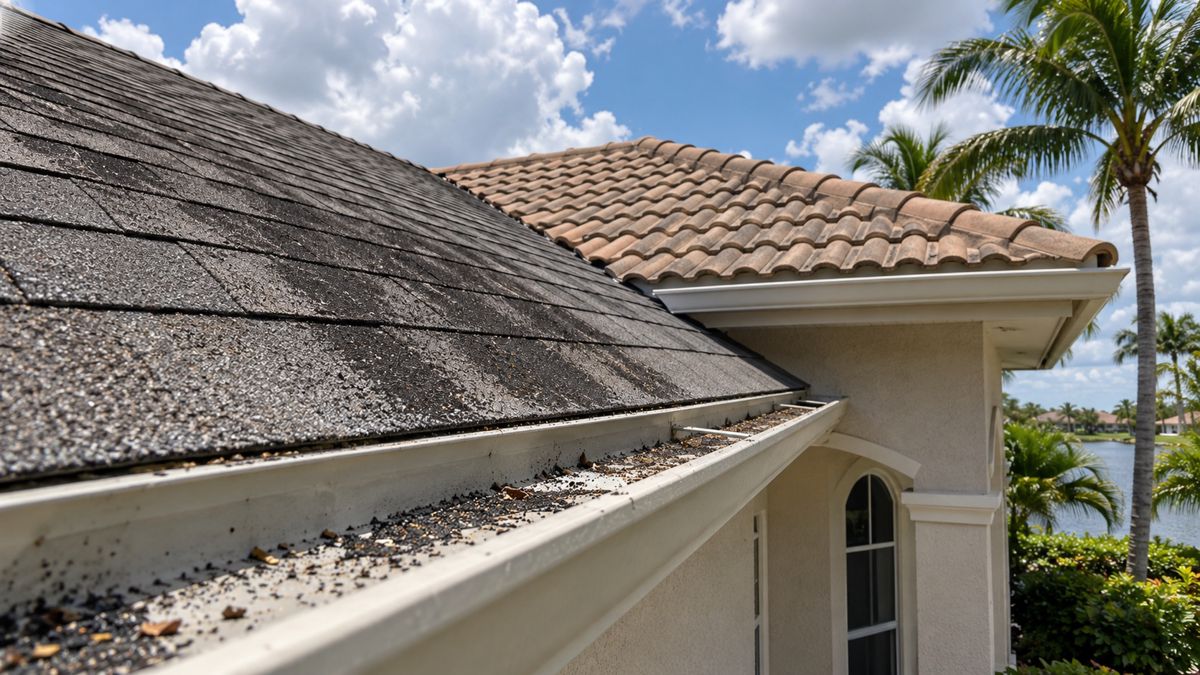
Yes, high pressure power washing can damage a roof, and it often does so quietly. The spray can strip the protective granules off asphalt shingles, break the seal that holds them down and crack or chip concrete tile. The harm is not always visible on the day. It tends to show up later as leaks, early wear or a roof that ages faster than it should. A low-pressure soft wash is the safer way to remove the dark streaks.
How does high pressure hurt asphalt shingles?
An asphalt shingle is a mat coated in asphalt and topped with small mineral granules. Those granules act like sunscreen. They shield the asphalt from the sun and help shed water. A narrow jet at high pressure can knock them loose, and you may find them in the gutters or on the ground below.
Once the granules are gone, the asphalt underneath is exposed to Florida sun. It dries out, cracks and wears faster. That is why a roof that looks cleaner after a power wash can end up with a shorter life.
There are other problems too.
- Seal strips can break, so shingles lift in the next strong wind.
- Water can be forced upward under the shingle edges and into the roof deck.
- Thin or older shingles are the most fragile, and the damage is permanent.
Many shingle makers advise against pressure washing, and some warranties have conditions about how a roof is cleaned. If your roof is still covered, read the paperwork before anyone touches it.
What about concrete tile roofs in Bonita Springs?
Concrete and clay tile roofs are common across Bonita Springs and the master-planned communities around it. They look sturdy, but they are brittle in some ways.
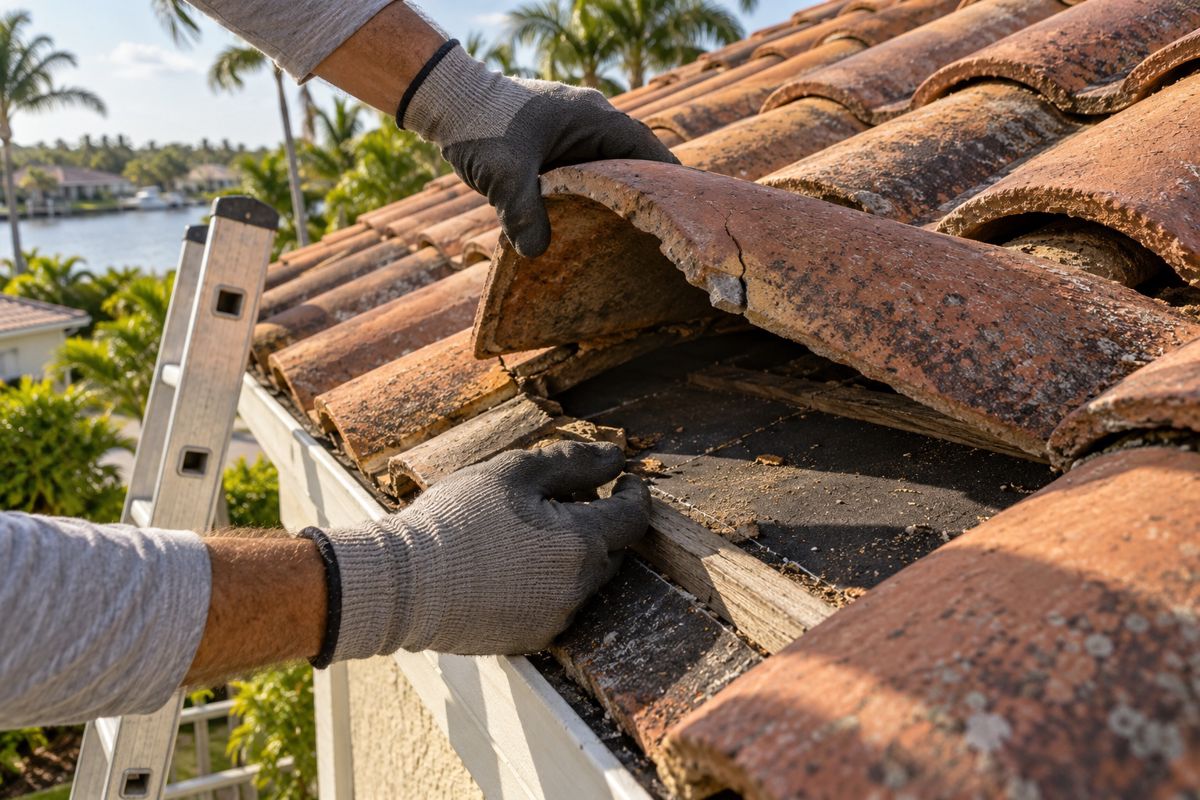
Hard spray can chip the surface and crack edges. It can push water sideways under the tiles, where it reaches the underlayment, the layer that does much of the waterproofing. On many tile roofs the underlayment ages faster than the tile itself, so a roof can look fine from the street while the layer below it is already worn.
Tiles also break when someone steps on them in the wrong place. A careful crew knows where to walk and uses low pressure from a safe position. If a contractor plans to blast the tile, that is a reason to ask more questions.
Why do roofs get black streaks here in the first place?
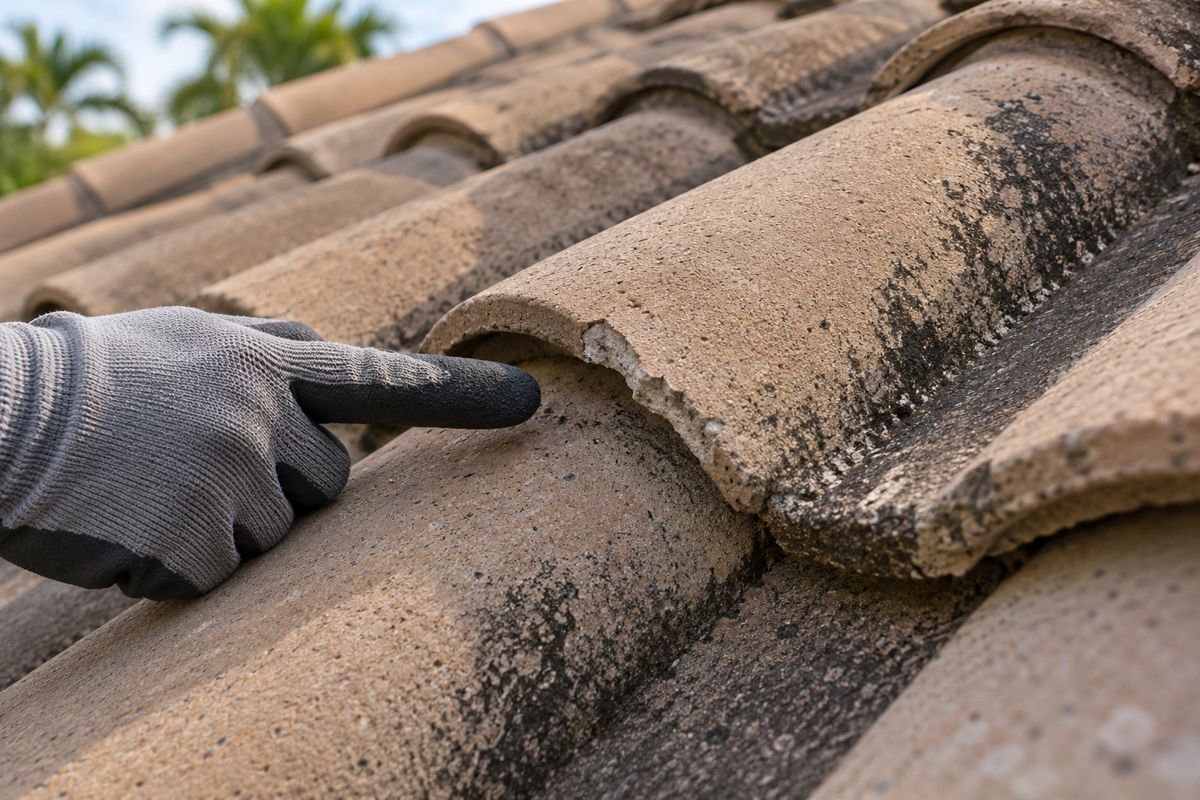
The dark streaks are usually algae, commonly called black algae. It travels on the wind and settles where moisture lingers. Southwest Florida has warm temperatures, high humidity and a wet summer season, which is close to ideal for it.
It tends to start on shaded slopes, under trees and on the north side, then spreads. On shingles the growth can feed on mineral filler in the shingle. On tile it grows on the porous surface and can bring green moss in the gaps.
The streaks look bad, and a stained roof can lower how a home looks to buyers. They are also a reason people reach for a pressure washer, which is understandable but the wrong tool.
Homes near the coast and the Imperial River can also collect salt and dust on top of the algae, which makes the roof look even duller. That film rinses off easily and does not call for force either.
One more point is worth knowing. Streaks are rarely a sign that the roof has failed. They are usually a surface problem, and treating them gently keeps the roof in the condition it is in today.
What is soft washing and why does it work better?
Soft washing flips the idea. Instead of using force to scrape growth off, the crew applies a cleaning solution that kills the algae, mold and mildew. The solution sits for a short time, then it is rinsed away with low pressure, about what a strong garden hose gives.
Because the growth is killed rather than blasted, the result tends to last longer. Roots of the algae are treated, not just the visible stain. The roof surface, granules and seals are left alone.
Some practical details help.
- Plants below are wet down before and after so the solution does not harm them.
- The mix and rinse are matched to the material, shingle or tile.
- Cleaning is done on a calm, dry day, since wind carries spray and rain dilutes the treatment.
What should I ask before I hire someone to clean my roof?
A few direct questions sort out most of the risk.
- Will you use low pressure and a cleaning solution, or a pressure washer on the roof surface?
- How do you get on the roof and move across it without breaking tile?
- Do you carry liability insurance, and can I see a certificate? Ask to see a contractor's license and insurance rather than taking it on trust.
- How will you protect plants, pool equipment and the lanai?
- Is the quote written, and does it list what is included?
If you get vague answers or a strong push for high pressure, keep looking. A good contractor is comfortable explaining the method.
When is cleaning not enough?
Cleaning removes growth. It does not repair a roof. Look for these signs before you book, and call a roofer first if you see them.
- Missing or curling shingles, or bare patches where granules have worn away.
- Cracked, slipped or loose tiles.
- Water stains on ceilings or in the attic.
- Sagging areas or soft spots.
This matters after storms. Hurricane season runs from June to November, and wind can lift or crack roofing without making it obvious from the ground. A clean roof also makes damage easier to see.
What is the safest next step?
If the streaks are the only problem, a soft wash is the usual answer. Keep pressure washers off the roof, ask the questions above and get the quote in writing. You can read how our roof work is done on the roof cleaning page, or explore the house washing page if the walls need attention too.